urbanism – landscape – ideas – theory – whimsy

Lower Don Vision – bricoleurbanism style
lowerdon_bricoleurbanismorg_crop2.jpg

The TWRC recently put out a call to Torontonians for visions for the Lower Don Lands and the mouth of the Don River (see here), perhaps as a consolation for the closed, restrictive process they seem intent on following for their “Innovative Design Competition for Toronto’s Lower Don Lands” for which they released a shortlist on 2 February (see here).

Maybe they thought that the Innovative Design Competition for the Central Waterfront (see here) was so successful, they figured they’d just do the same thing over again. At least it’s clear that they’re intent on moving forward with winning schemes into implementation, which is not always the case.

But starting off with an RFP process is hardly a way to get the maximum number of people involved. While they say that they’re “seeking input from the world’s most talented and creative design and engineering professionals in developing bold new concepts for the Lower Don Lands area”, it hardly seems likely that the world’s most talented and creative people have been boiled down to the 5 shortlisted teams. The proposals themselves are never released publicly, only the finalists’ entries are, so at best we get 5 concepts to publicly review and have to rely on the wisdom of the shortlisting process to have chosen teams that might produce the most innovative design responses.

While the process obviously can work (quite a bit of attention was generated with the Central Waterfront competition), it does have drawbacks – the winning team for the Central Waterfront (West8/DTAH) was a clear winner since most people were less than impressed by the other teams’ submissions. The fact that the Nathan Phillips Square competition (see here) is being run in the same way, makes it clear that a wide spectrum of ideas is not what public agencies in Toronto are really after.

Which leaves some designers and Torontonians (either those not shortlisted, or ineligible to compete by virtue of not being on a team with all the requirements demanded by the RFP) shit out of luck. Cue the “Submit Your Vision for Toronto’s Lower Don Lands”. However, being limited to a single double-sided letter sized page is certainly unusual for most designers, so it’s obvious that they really are looking for the ideas of the average Torontonian.

And as for design students, who traditionally are keen submitters to competitions (if only because their studios are often based on a current competition), whatever ideas they may have come up with, they’d better fit on that double-sided page too.

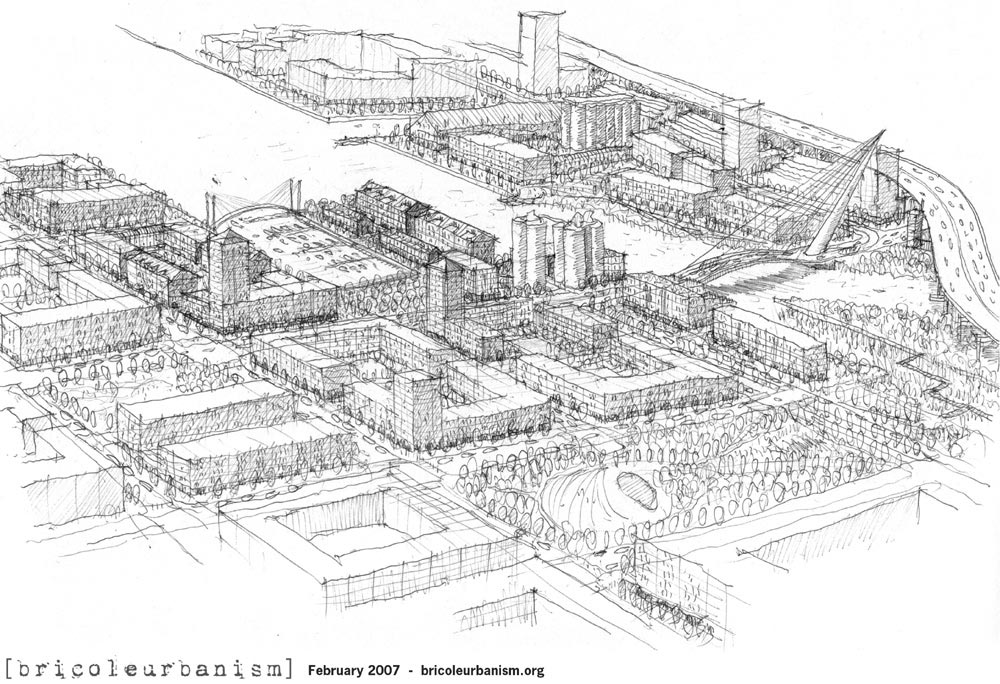
So, even if only to get the ball rolling and get some ideas out in public (where’s the TWRC going to hide all the visions submitted by Joe Public?), bricoleurbanism.org is proud to here present our vision for the Lower Don Lands. Click on the images to view the full drawings.

lowerdon_bricoleurbanismorg_crop4.jpg

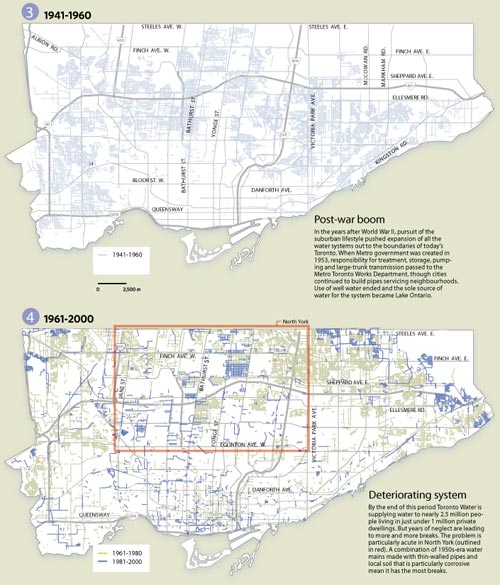
Mapping Our Urbanism Part III – Water Mains

to_watermains_early2_e.jpg

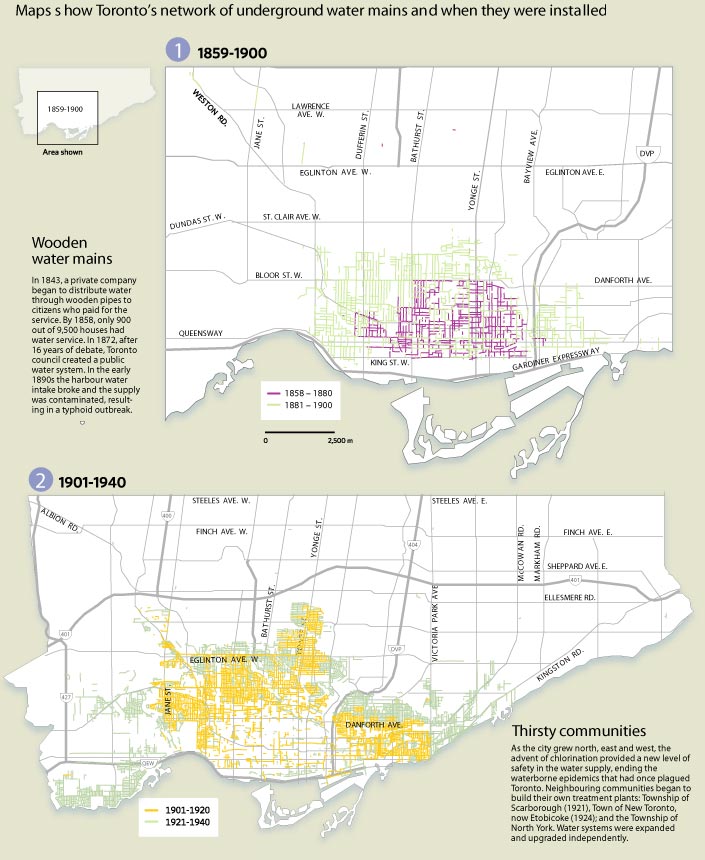
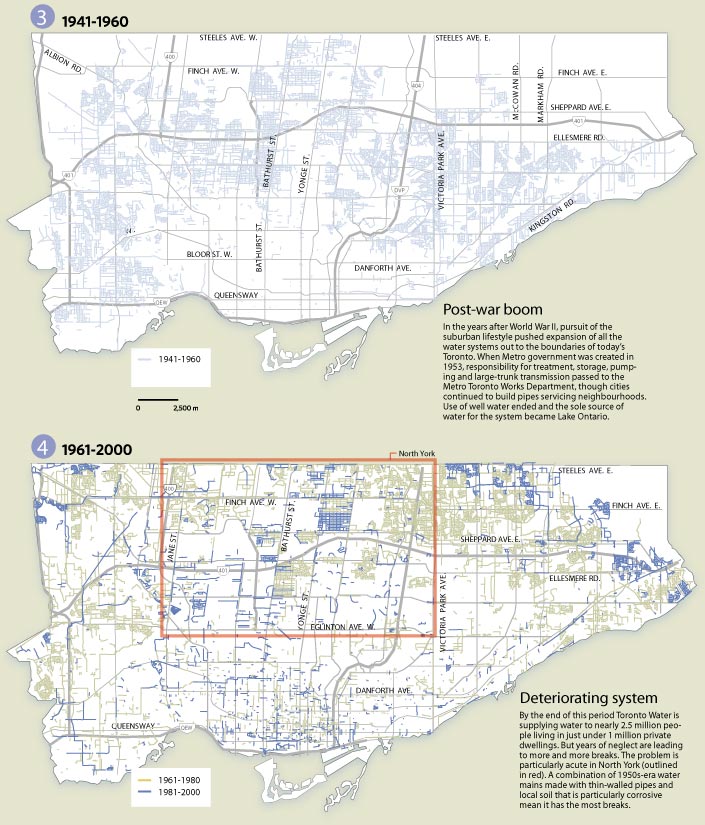
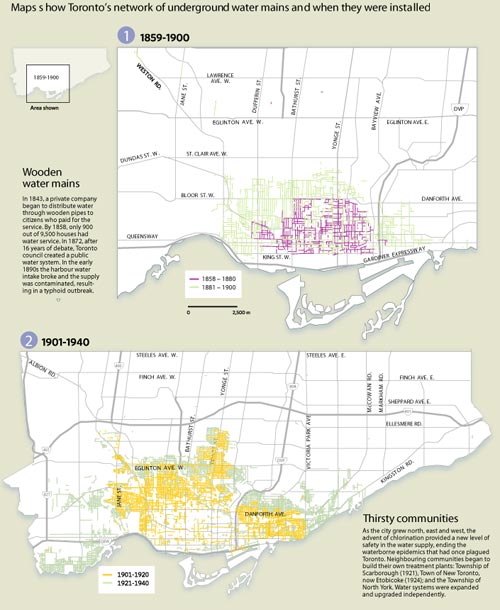
In the Toronto Star last weekend was a special 2-page spread on the sorry state of Toronto’s water mains with emphasis on who’s to pay for upgrades (see story online here). However, the maps included give a fascinating glimpse into the history of Toronto’s development seen through the age of the water mains. Divided into four periods, 1859-1900, 1901-1940, 1941-1960, and 1961-2000, these maps are indispensable for anyone interested in the history of urban infrastructure. To see a little more detail, follow these links (maps 1+2, maps 3+4) – if you prefer a much more detailed PDF version of the maps is available from the Star’s site here (PDF).

to_watermains_modern2_e.jpg

Crossposted to the Spacing Wire

Planning in Ontario – Part I: The OMB

With all the bad blood that the Queen West Triangle planning and OMB extravaganza has created in Toronto (see Active 18, spacingwire posts here, Reading Toronto here), it’s worth reflecting on the true nature of planning in Ontario.

Anyone familiar with the Ontario Municipal Board (OMB) process will know that the “Board” is in fact essentially a kind of court (dare we say kangaroo court?), where land use planning disputes are frequently heard when someone doesn’t like the decision made by the municipal planners or politicians. The process really boils down to lawyers arguing before a judge, using “experts” from the professions as both hired witnesses and fabricators of “evidence”. Anyone who thinks that that sounds a little strange must be new to the bizarre world of planning in Ontario.

In the spirit of openness that our planning system should be engendering, let’s get some help from Ambrose Bierce’s wonderful century-old Devil’s Dictionary for some enlightenment on the process (an online version of the dictionary is wideley available as copyright has expired, try here).

Bierce defined a lawyer as:

LAWYER, n. One skilled in circumvention of the law.

Who better to be in control of key planning decisions in Ontario?

But wait, there’s more!

The profession of planning in Ontario seems to be held in such poor esteem by the populace that despite widespread disgust with the OMB and its (perceived) pro-development decisions, there seems to be minimal support for planners having any more control over planning either! Who needs those silly professions after all?

Luckily, Bierce can help us out again to clarify what planners are trying to do in the first place.

Bierce defined to plan as:

PLAN, v.t. To bother about the best method of accomplishing an accidental result.

Sound familiar?

We might go so far as to say that such a definition of plan largely applies to public planning in this province. Private (consulting) planning might be better represented by an amalgam of the two thusly:

PLANNER (PRIVATE), n. One skilled in circumvention of the plan.

Enough said! Lesson 1 of a 106 part series, “Planning in Ontario”!

“Paving” the way for a new Four Seasons

yorkville-bay-pan-f_e.jpg

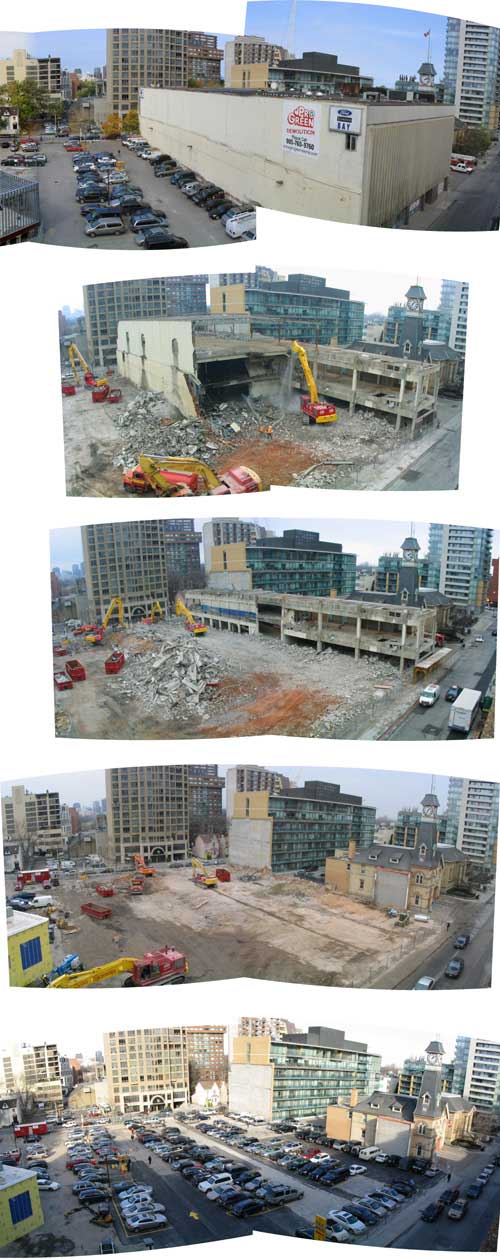
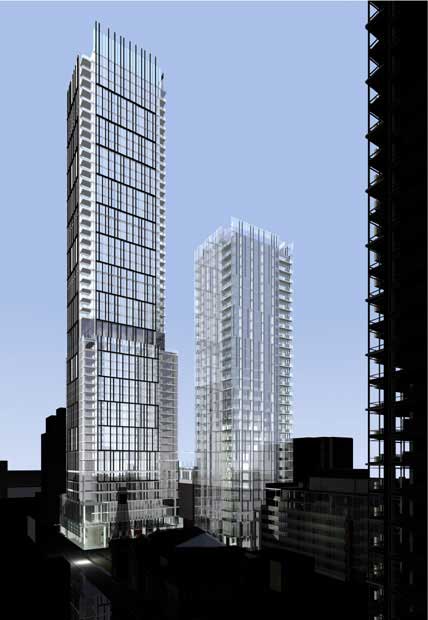
A rough timelapse sequence of the demolition of the old Ford dealership on Yorkville Avenue as part of site preparations for the new Four Seasons hotel/condominium proposal which will stretch from the historic fire station (with the tower visible in the photos) west between Yorkville Avenue and Scollard Avenue to Bay Street. The yellow box in the left of the photos is the sales centre (under construction).

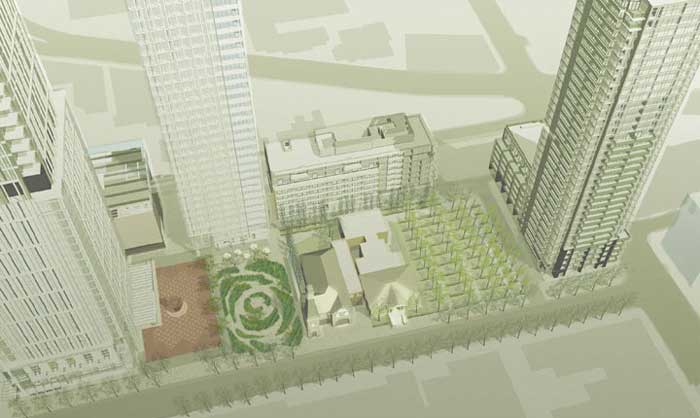
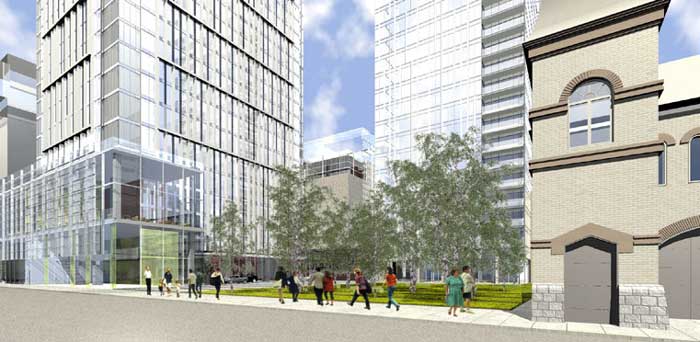
The proposal is for two towers, one 46 storeys at the corner of Bay and Yorkville and the other of 30 storeys on Scollard adjacent to the existing recently completed mid-rise residential building. The proposal also includes a new urban square/park to complement the one built to the east of the fire hall and Yorkville library as part of the 18 Yorkville development, along with an integrated linear connection joining the two parks behind the library and fire hall. While these drawings certainly don’t show that the new park at this point will have the panache of the one designed by JRALA, the proposal has been given City approval, but I believe it has been challenged at the OMB by community and residents groups, with a decision still to come. More info (from the City) can be found here, OMB case details here and here.

Despite the enormous amounts of money involved in such large scale developments, it’s a sobering thought that surface parking is so profitable that it’s the first thing you do while waiting for your official go-ahead.

4s_4_birdsey_view_e.jpg

4s_courtyard2_lg_e.jpg

4s_dusk_lg_e.jpg

Where Dupont meets Dundas meets Annette

284_8486_e.jpg

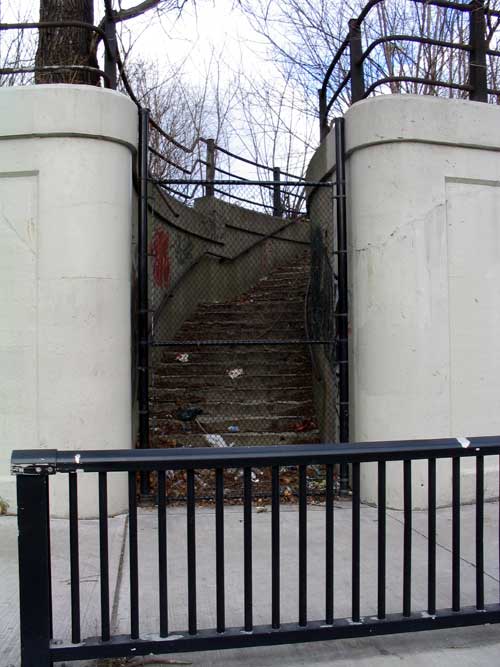
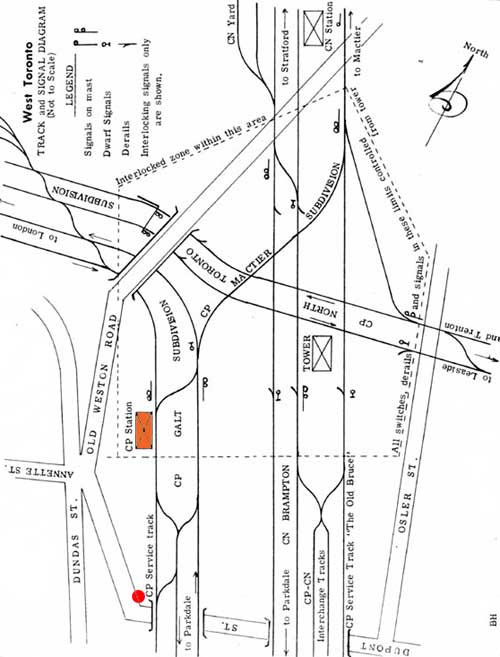
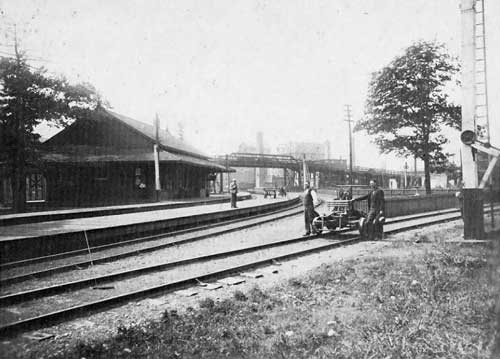
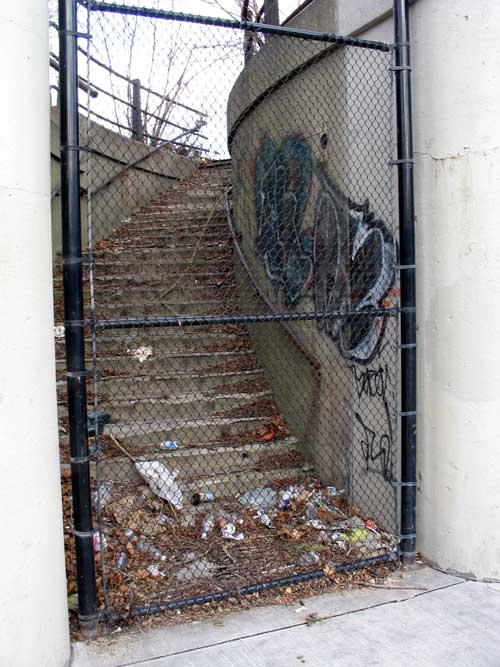
This enigmatic and forlorn stairway cuts through the retaining wall of the railway overpass crossing Dupont Street where it meets Dundas Street West and turns into Annette Street. A little historic investigation reveals that the old West Toronto CP passenger station (demolished in 1982, in orange on map below) was just along the tracks from here, though this stairway (red dot below) was not the main entrance. It’s likely that this was an entrance/exit to the southern end of the CP station’s platforms, allowing easier access to the important historic service into Union Station.

westtordiamond_map-1961_e.jpg
Map of track and street layout in 1961 with the CP station in orange and the stairway at the red dot (original map from
Old Time Trains here)

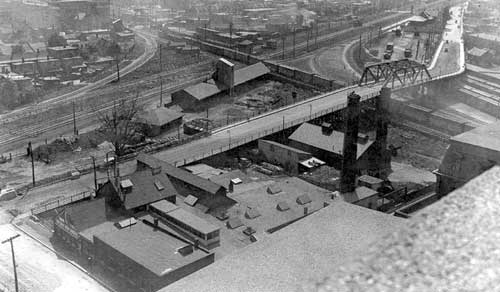
Those of you wondering what Old Weston Road is doing connecting into the Annette/Dundas/Dupont intersection may be surprised to know that up until 1983 (when the venerable old bridge was demolished) Old Weston Road bridged the tracks at this point enabling a very quick and easy trip to the north avoiding the congestion of the Keele/Dundas intersection and underpass.

weston-rd-bridge_1920_e.jpg
The Old Weston Road bridge in 1920, with the CP station in the top right corner (from
Old Time Trains here)

west-toronto-2nd-stn_1898_i.jpg
The Old Weston Road bridge in 1898, with an earlier CP station and platforms (from Old Time Trains here)

west-toronto-station_cpr_1957.jpg
CP station and platforms in 1957 (from Toronto Public Library virtual exhibit here)

284_8485_e.jpg

In any case, it’s a reminder of the reversal of transit connectivity the city suffered with the “modernisation” of its transportation infrastructure. Where once the Junction was connected by both streetcar and passenger rail to the rest of the city, it now suffers from disconnect, clinging by a key bus route over a former streetcar route to Dundas West Station. Optimists will be happy to know that the proposed airport rail connection is intended to use this railway line, but as far as I know, the Junction is an unlikely location for a new station since even if the line is built, a stop would no doubt be located at Bloor where the current GO Transit station is (and a subway interchange could be made), and unfortunately the Junction is closer than they would like to have the next station – all the more reason to use a Light Rail (LRT) or other electrified option, which allows for much easier acceleration and stopping and so closer stations.

Even without the best of transit, a new development by Options for Homes is in the works on the old Canadian Tire site south of the tracks off Keele Street north of Dundas Street West recently profiled in a Toronto Star article (see here – PDF) – the reinvention of the Junction continues, and for the community, it can’t happen fast enough.

**edited to reflect changes and corrections made to the version on the spacingwire here**

“The more you drive, the less intelligent you are”

repoman_still1.jpg

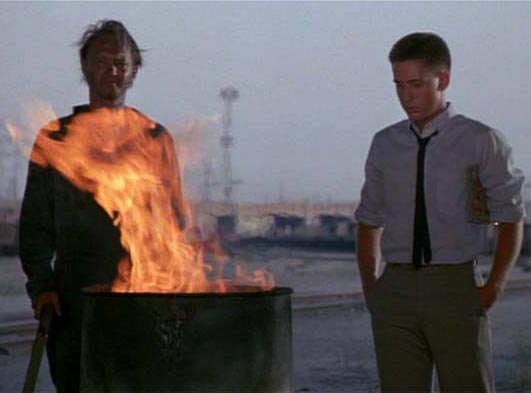
This one goes out to my good bud over at the Allderblob, who’s feeling kind of down and unappreciated. Amongst some memorable moments in the 1984 cult classic Repo Man, is this philosophical interregnum around an oil-drum fire, in which Miller extols the value of riding the bus – it gives him time to think. As he says,

“The more you drive, the less intelligent you are.”

–Miller (Tracey Walter)

In a wacky world whose oil-obsessed car culture has been so degrading and destructive (something hinted at presciently throughout Repo Man), thank God for the Millers among us, those kooks who see through the spectacle of our society and refuse to let the “real world” compromise the truth as they see it, even when it drags them through the muck and gets them down.

Here’s to you and your ilk, Allderblob!

Beautiful Urban Moments – Part VIII

284_8483_e.jpg

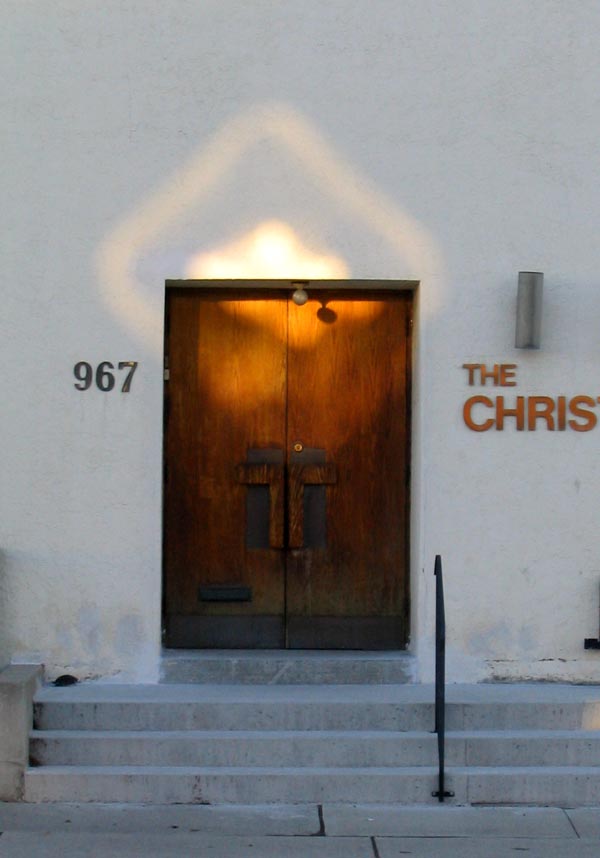
On my way to work this morning, I noticed this strange reflection above the doorway of the “Christadelphians” building on Ossington between Dupont and Bloor. Investigating, I discovered that with the sun just coming over the city’s roofs, a metal medallion embedded in the wall of the house across the street was creating this perfect reflection on the opposite building – the moment was so fleeting, it had almost passed by the time I got the camera out. No doubt there will only be a few days a year when the reflection corresponds so wonderfully with an architectural feature. Who are the Christadelphians you ask? How the hell do I know, but it’s worth looking up, if you’re interested…

Merry Christmas from a Snowless Toronto!

284_8472_e.jpg

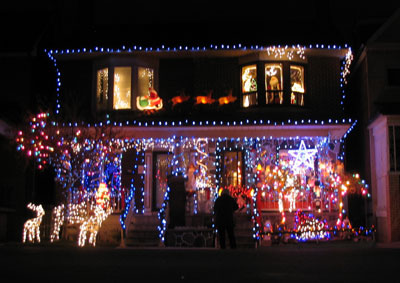
Christmas lights give cheer even when snowlessness abounds – houses on Lappin Avenue in the west end. Not to appear to stereotype, but I got the impression that the creators were Portuguese – masters in the art of eclectic decoration.

Merry Christmas/Happy Holidays!

Gardiner’s No Innocent

south-parkdale-1950s.jpg

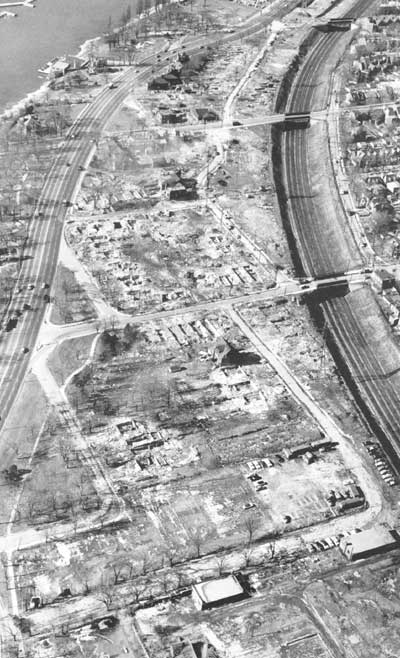
The demolition of South Parkdale circa 1956 to make way for the Gardiner Expressway, from Mike Filey’s “A Toronto Album 2: More Glimpses of the City That Was.” In Filey’s sanguine words:

“One minor problem associated with building the new highway was the need to demolish approximately 150 houses in the south Parkdale part of town – oh well.”

Oh well? For comparison, there are 262 homes currently on the Toronto Islands. The most striking thing you might notice about this stunning photograph is how the neighbourhood of south parkdale directly faced and related to the western waterfront across Lakeshore Boulevard – something almost unrecognizable along the western waterfront today since the area was excavated to build this section of the Gardiner. Note too the frequency and intimacy of the bridges crossing the railway corridor – a level of waterfront connectivity totally lost upon redevelopment and demolition (edit: a commenter pointed out that all 3 bridges in the photo still exist, it just seems like they knit the two sides together better because in the photo they do not end up at on ramps, highways and empty leftover green space as they do today).

Most interesting of all though, is how a whole neighbourhood like this can disappear without a trace. Were it not for Mr. Filey’s book, I would never have known, not being old enough to remember a different Toronto waterfront. In all the hubbub about the work of the TWRC and the revitalization of the Toronto waterfront, it’s worth remembering that we had a great waterfront once upon a time, and systematically, with cruel logic, we threw it all away. May we remember our lesson, and not let it happen again.

Pedestrian Traffic Signals Start Counting Down

284_8456_e.jpg

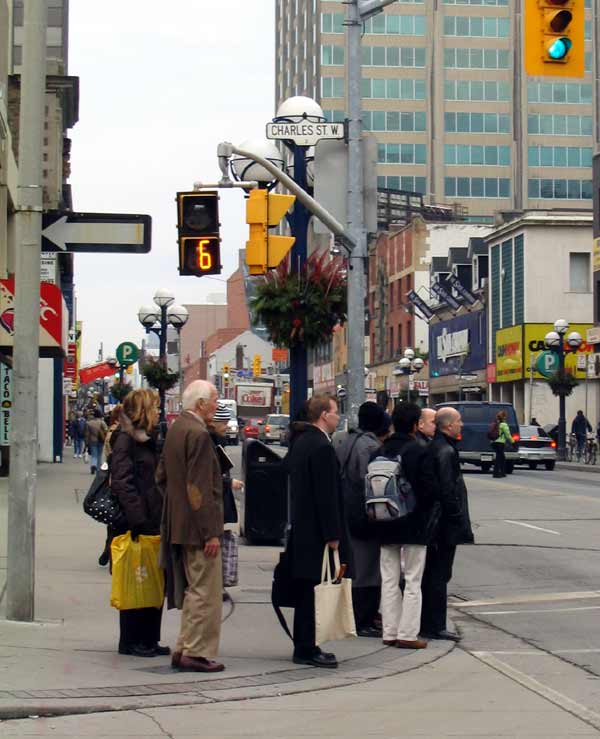
A long-awaited feature in traffic management is finally being implemented in Toronto with the introduction of a visual countdown (in seconds) for the pedestrian light at traffic signals. The countdown begins at the point when the pedestrian light starts flashing the orange hand (the hand is mid-flash in this photo). So far it’s a great success and makes things very convenient for pedestrians, letting them know whether or not they really have time to scoot across the road – especially on those annoying streets when the orange hand seems to flash forever and start mere seconds after the light turns green…. a great feature.